
Gonzaga '25 Musings
The season enters a new phase!
Tournament Recap
Michigan BP wins! 2 wins, 1 finals and 3rd at the KY RR thus far.
47 different teams have cleared at one of the three majors thus far. Newest teams to do so – Wake HN, Iowa EW, MSU JS and Michigan AO.
Kentucky RW (20) beat NU NP (13) in the doubles. Then the octafinals and quarterfinals were a lot of chalk. BUT THEN Michigan BP and Georgetown AC advance to the finals as the 5th and 6th seed.
The Affirmative won:
- 8 of 13 doubles debates (62%, 3 walkovers)
- 4 of 7 octafinal debates (57%, 1 walkover)
- 1 of 4 quarterfinal debates (25%)
- 0 semifinal debates
- 0 final debates
That’s 13 out of 27 (48%) affirmative win percentage in elims. Better than at Kentucky, but the affirmative did a lot of losing from the quarterfinals onward.
There were 358 debates at the tournament, of which the negative won 190 (53.1%). This has a 13% chance to happen with a fair coin.
In total for the season, this brings us to 1247 debates, of which the negative won 669 (53.6%). This has a 0.005% chance to happen with a fair coin.
The Wiki and Debate Docs
Shoutout to all the heroes and legends that use debatedocs and update the wiki before an RFD is given. The magic is in the consistency, not the intensity.
Slops to those who are in the debatedocs group but do not put their debates on there. Free riders! Gross!
Slops to those that do the debatedocs if they are affirmative, but not when they are negative.
Slops to those who use opensource to prepare for tournaments, but do not reciprocate.
Slops to those without a complete wiki.
Minor slops to those who update their wiki in batches at the end of tournaments.
Slops to anybody that does not disseminate the evidence they read for scrutiny in a timely manner. What the fuck is the point?
Round 7 was particularly nice from a debatedocs standpoint. Doubles was particularly bad.
I know I ask the world of all of you, but I promise debate will be more fun in a variety of ways, if the time wasted tracking information down would substantially decrease.
Highlighting
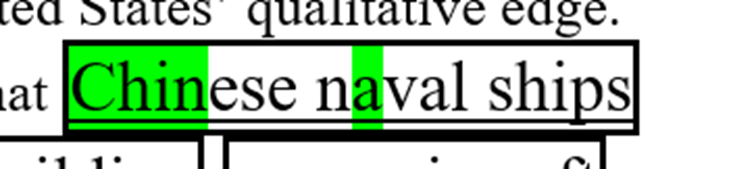
I don’t think this is how it works:
Kansas and Shunning
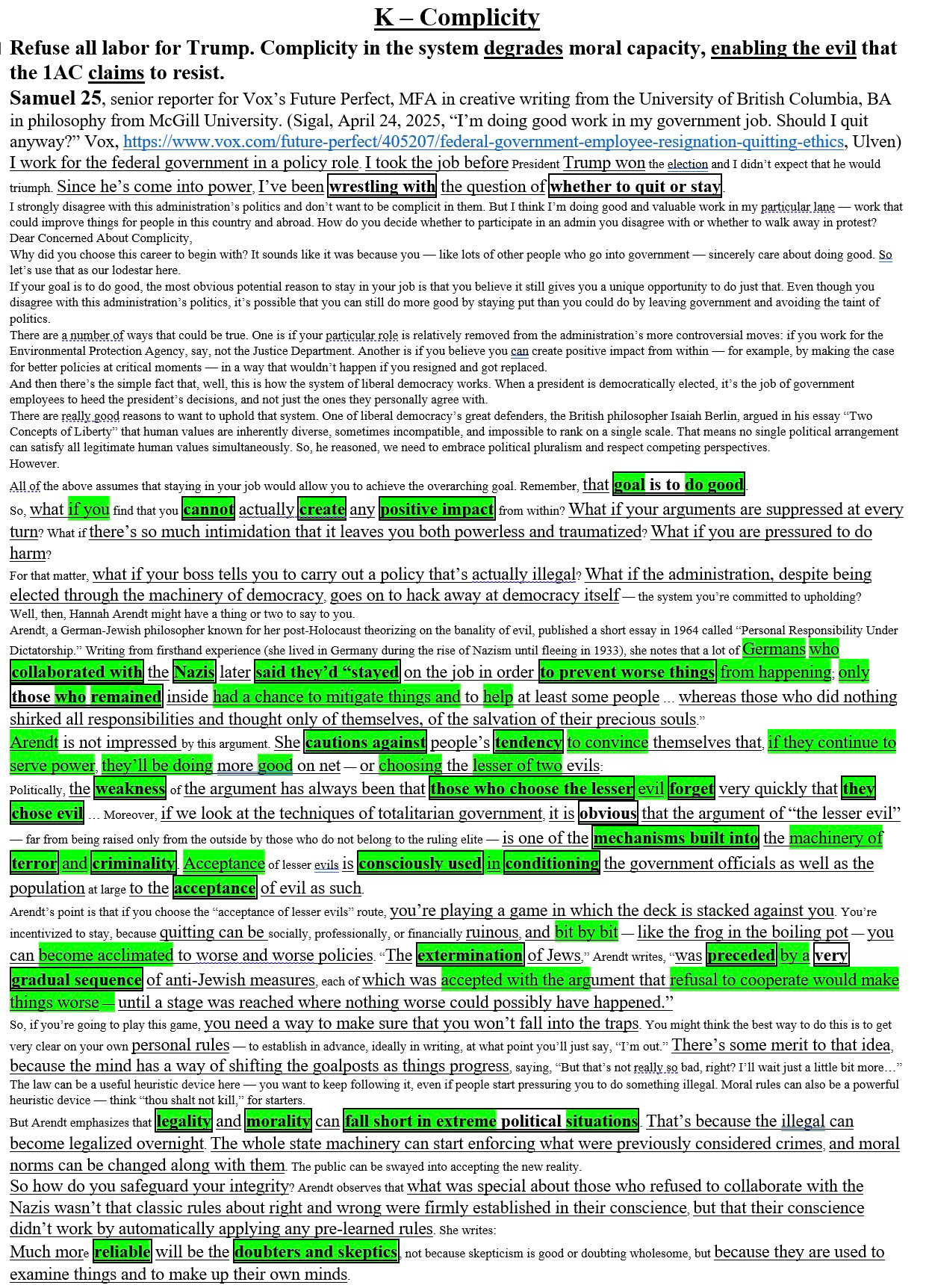
Put it on the preseason prep list: recreate Shunning in some way. Kudos.
The Golden Ratio
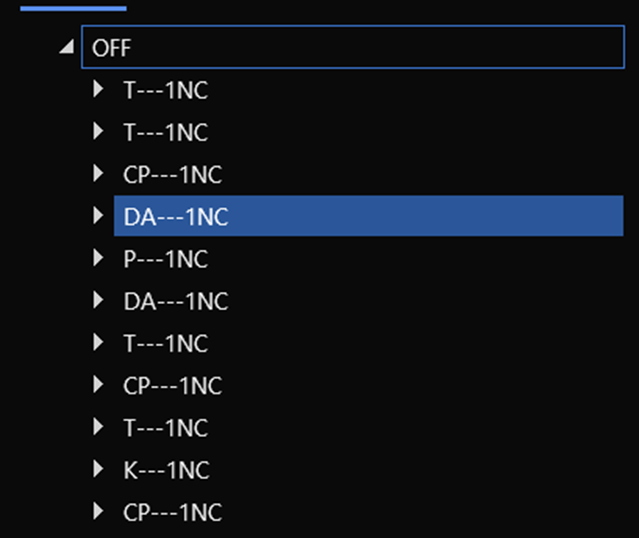
Here is a puzzle. I believe the affirmative may have been disclosed new, but ended up being federal workers. There are 11 off there. Could you name 11 off you could read against federal workers? How many guesses would you need to get all 11 correct? It turns out only 9 of the 11 were read, could you possibly guess which headers were skipped?
The actual point is – should there be an acceptable ratio of DA’s to other off case. That is 2 DA headers and 11 total headers. .181818 is not the golden ratio for DA’s in a 1NC I will tell you that.
Tags

Uhhhhh
Don’t Do This
Part 1:
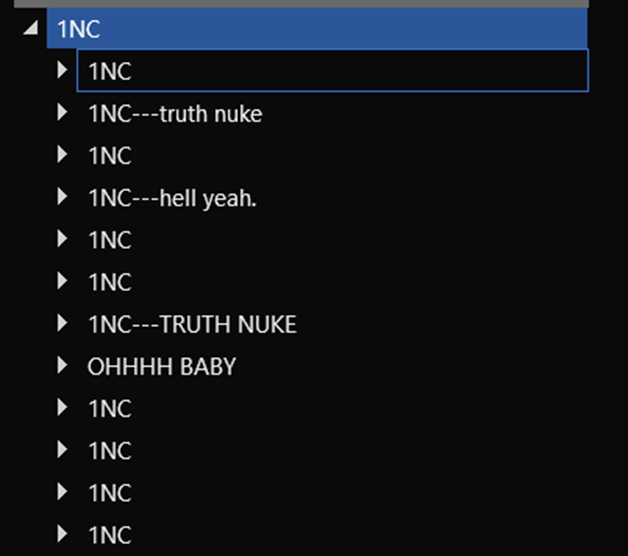
Part 2:
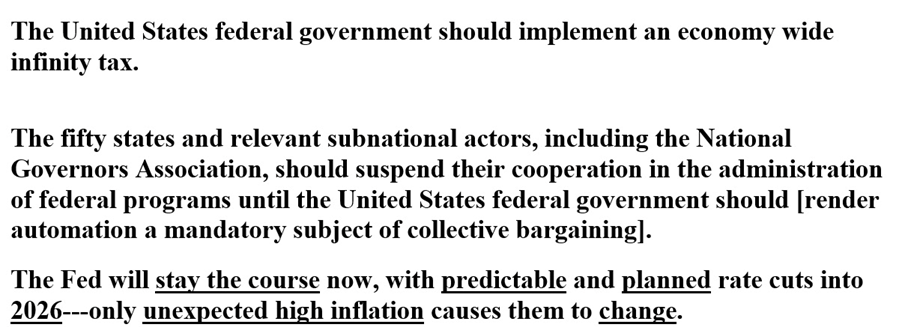
And:
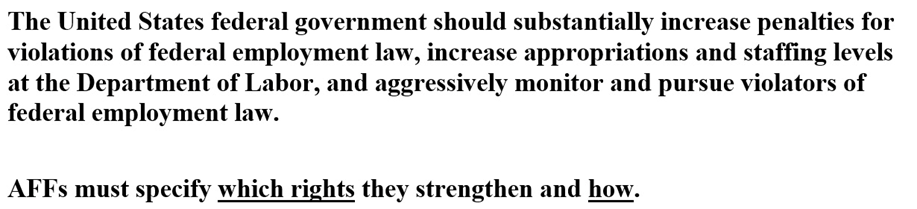
And:

Etc etc
I wish I could say Part 3 was taking the L, but the neg won on the cap K. Ass!
Post-Rounds
I’ve given post-round advice before:
 Lincoln Garrett
Heard that after a couple of debates the main takeaway was “we have to nuke X or Y off the pref sheet.”
Not the best reaction. Debater judge relations are better thought in terms of “you gotta dance with the one who brung ya.”
In that spirit, you have to invest in some number of judges and figure out how they work. How else are you going to get them on your side the next time? It is better to be judged multiple times by the same person instead of constantly rotating. You can still get rid of people that do not meet a minimum threshold of competence but the bar for that should be kind of high.
The ideal approach in the post round is to constructively figure out where you went wrong and what you could do better.
If you are very frustrated, I would still advise refraining from “going off” on the judge. I would think of it as debating their RFD somewhat. If you do this without hostility you will hopefully expose gaps in their thinking that will inform the way they judge you next time. At this point that is the best you can hope for in the case of an L, because the debate is already gone. The only question is, what are you going to do in this post-round to help you win the next one?
Preambles to DA’s
Here is a particularly egregious example:
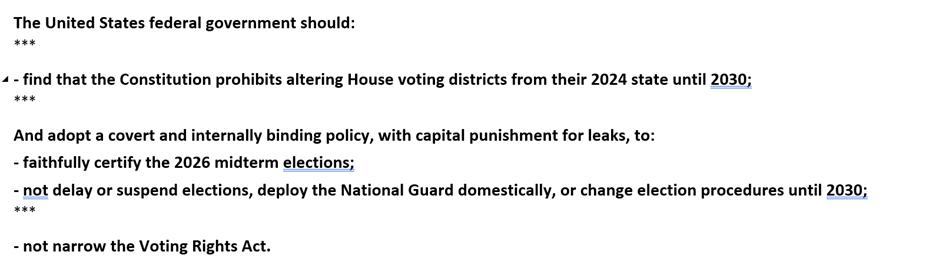
If someone says we will faithfully administer the midterms they are killed? Are you stupid?
I do not understand where this trend came from. Every DA seems to have a CP before it. There are two issues with the practice.
First, I seldom can figure out what the hell the CP is for. Theoretically the negative is CP’ing out of arguments the affirmative could make or they are making it so the affirmative cannot straight turn the position. Except when I read these CPs I cannot picture an affirmative ever wanting to bring up what the CP targets.
Second, this is an egregious conclusion to unchecked conditionality. Does it encourage clash? No. It preempts HYPOTHETICAL arguments AND it does it without any evidence or research to support it.
The complaint from the affirmative that it was impossible to debate when the negative read 3 CP’s rang hollow to most. However the reason was very distinct from what is going on currently. If the negative reads 3 CP’s that were arguably competitive the affirmative could theoretically craft substantive offense that applied to multiple pages at once and would stand even if none of the CP’s were present.
Squo 1NC’s are not doing that. First, they are reading more conditional advocacies and they have no qualms about theoretical combinations. Second, they are reading one to three CP’s (with multiple planks most of the time) that just say arguments the affirmative cannot make. This bolsters the one to three other CP’s the negative reads. It also provides a no-cost option to the negative where they can deter the affirmative and then once new arguments cannot be introduced the CP goes away. Stupid!
CP’ing out of arguments is fine. It has to be done with a strategic cost. That cost has to be a limit to how many conditional ideas you can propose. The alternative to this is – at best – a giant waste of speech time. The worst of it is it makes the 2AC have to navigate a labrynth of hypothetical combinations the neg could advocate later in the debate.
Failing that, we could at least all agree that combining previously unconnected CPs is equivalent to reading a new CP and should be subject to the same restrictions. The same is arguably true of kicking planks.
There are many examples of policies in the real world that are more than the sum of their parts. In judicial review, there is even a concept – “severability” – that refers to whether a court can strike down part of a policy without striking down the whole. The idea behind this limitation is that letting courts get rid of parts of some policies makes them akin to legislators passing new laws, since the component parts of policies are often a compromise and designed to work together to produce a particular outcome.
Even if all CPs don’t work like this, it’s easy to imagine a CP that clearly does. Suppose:
The United States federal government should:
- Adopt a substantial carbon tax
- Set the amount of that tax to $0 per ton of CO2e
- Use the money from this tax to subsidize electric vehicles
- Subsidize electric vehicles
Extending plank three gets you out of reverse spending DA to a carbon tax. Extending plank two kicks planks one and three, but not four. Kick plank three and you can read normal means cards that the revenue from the carbon tax supports renewables.
Typical interactions are more subtle, but it is telling that when evaluating the legitimacy of perms we consider the CP as a whole and don’t usually allow the aff to permute CP planks from other pages introduced by the neg.
Adopting this principle is a sensible, bare minimum limitation on preamble CPs: if you want to go for your DA along with a CP on another page, you can’t just fold in your preamble later, you have to read your preamble on any CP you might want to merge it with when you first introduce it or pay the price of allowing new aff arguments when you do it later.
From the affirmative’s perspective it makes no sense to try and punish the negative for a three second CP text with no cards that the negative can just kick. You really showed the negative, now they are stuck with…answering arguments? Debating? Wow!
I think people find this practice tedious. I think the reasons this is not a bigger deal are that the CP’s are so stupid with their targets that they do not really burden the affirmative team that much, and people have a pathological aversion to reading theory.
Yet.
Solvent vs Solves
This is solvent:
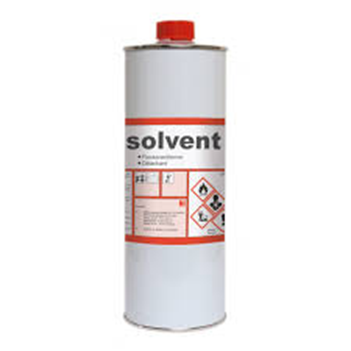
Instead of saying things slower and in the passive voice, just say shit solves.
Judge Doc Manipulation
This is referring to changing the headers around in a judge doc to editorialize. For the record – I don’t care that much about this. BUT the blog is back for the DISCOURSE.
First, you know who you are if you do this.
Second, some people (who could be your judges) are MAD. They definitely think it is cheating. Some say worse than clipping. I am not so sure about all that, but I would rather no one does it rather than see it devolve further.
I am just the messenger on this one. You’ve been warned!
Uncooperative Federalism
When I was coming up in debate the argument that occupied this space in the metagame was Consult NATO. The timeless generic CP. It became funny because people would consult NATO when the topic had nothing to do with NATO. People viewed it as a bad instantiation of tech over truth.
Is Uncooperative Federalism Gen Z Consult NATO? I think so.
Strategically, one would imagine there will be a CP that is a process CP that attempts to do the whole affirmative AND has a generic set of evidence about why the process leads to say yes thus allowing the negative to read it against any affirmative, in the presence of says no cards and without any specific say yes cards. Something will invariably try to fill that hole in the negative arsenal.
Uncooperative federalism does not seem like that argument. The CP has only gotten worse under Trump (who has done his fair share of threatening and leveraging).
Consult NATO is good when it is good. That is not every debate. Uncooperative federalism is the same way. You are confronting your opponents with a competency test, but not really moving the needle in your favor when you read it as a generic.
Breaking the same new aff twice
Michigan BP and Michigan SS read the same new affirmative in the octafinals and went 6-0 on ballots. The dream!
Good Header

Love ??? in the header. What IS Northwestern saying, indeed.
Kicking the DA immediately in the next speech is less of a flex though.
If Some is Good, More is Better
You are debating a new affirmative and the first card you read is this:
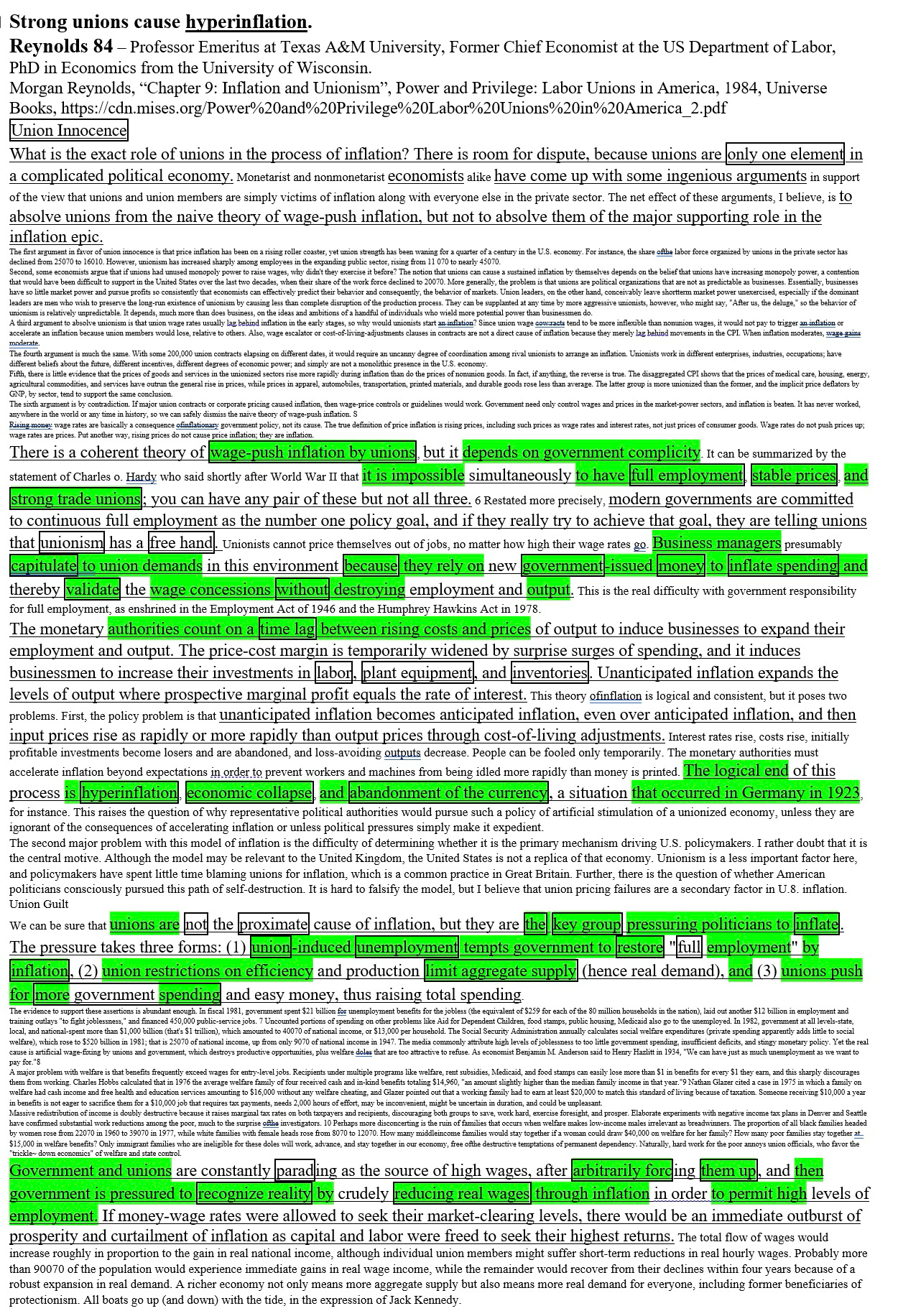
Bold statement. Love hearing about unions from people writing like there is still a Soviet Union.
The funnier part came in the 1NR:
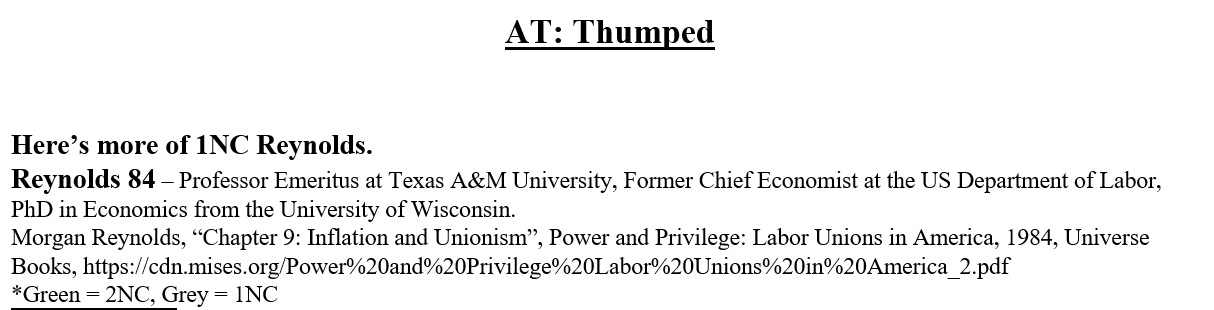
More Reynolds! To answer thumpers! From 1984! Our mans was ahead of his time.
Neg goes on to win the debate on Reynolds 84. Nice.
Best Big Team
The contenders seem to be Emory, Kansas, Michigan and Northwestern.
6 different teams from Kansas and Michigan have cleared at one of the three major tournaments. Emory 5. Northwestern 4.
Michigan and Emory both have second teams that have made a quarterfinal this year (Emory RY at Northwestern, Michigan SS at Gonzaga).
Record in the doubles across tournaments by school:
- Emory: 6-1, 2 byes
- Kansas: 7-4, 1 bye
- Michigan: 8-2, 1 bye
- Northwestern: 5-4
That’s all I got, I will let the reader decide what school is the best big team.
Zoom Debates
I judged one at Kentucky. It was middling as far as best practices go and I noted that at the time.
Reports from Gonzaga stated that best practices have been abandoned in zoom debates. I don’t think exorcising online tournaments is in the cards at the moment, so being better than your opponents at Zoom debate is an available edge.
The table stakes are figuring out if you are comprehensible over Zoom before the tournament. This has the same effect as being unclear, so getting this right is arguably as important.
If you sound bad, there are three common culprits:
- Your internet is bad
- Your microphone is bad
- Zoom noise suppression is compounding the above problems because your spreading sounds so bad Zoom assumes it is background noise.
There is not much you can do cheaply about the internet. If you have a particularly cheap computer, the issue may be your WiFi card; if so, connecting to Zoom on your phone may help. Getting a better microphone does usually also help. Turning off noise suppression is something everyone who debates online should do.
Judging
Heard troubling tales from the Gonzaga hybrid tournament. Judges openly saying things like "I couldn't judge fairly because it's round 4 and I’m tired." Missing parts of speeches because they stepped away from the computer and not restarting the speech because “it is too late”?? Not answering questions because it is too late at night?
The reports about judge behavior this weekend was a bit too much like a high school tournament for my taste.
Debaters need to be way nicer and more constructive with judges BUT judges – you gotta honor the hard work the students do and give it your all. If energy is a concern, you have to tell the tabroom that and ask for the last rounds of the day off.
4-4 teams
They should not clear, sorry. Believe the ADA rules have reared their head again. The rule that you have to clear half the field or a full doubles or whatever is most tedious in JV and Novice. This is because those events need more prelims where everyone debates, but if you have to clear half the field it likely will create a partial elimination debate that clogs up a schedule slot. Not great.
In the context of Gonzaga and the open division it meant 4-4 teams cleared. You gotta win more debates than you lose to debate in the elims. Not too burdensome a standard.
Tabroom Flips
They are a scam. Probably bought and paid for by Big Michigan. Go back to real coins.
Federal Workers Neg
Gtown said federal workers will lobby for big tech regulation which is bad. They also said public unions should be banned for freedom of association, but I think someone said that already.
Northwestern said a European Brain Gain DA (I believe Georgia attempted this argument first at the Minnesota tournament (always be doc surfing)).
Emory said public unions should be illegal because they are a private nondelegation.
Berkeley read a DA about return to work mandates being good for cities and unions mess those up, then immediately kicked it to go for the cap K.
It seems the topic in the elim team metagame is beginning to shift to…
New Affs!!
In big debates, these were:
- Gtown AC – Round 4 – vs NU LR – The United States Federal Government should render automation a mandatory subject of collective bargaining. I did not scrutinize what the differences were between this and Michigan BP’s affirmative from Kentucky finals.
- Michigan BP – Round 7 – vs Gtown AC – The United States Federal Government should strengthen collective bargaining access rights. Can call this the Takings Aff.
- Michigan BP – Octafinals – vs. NU AT – The United States federal government should substantially strengthen collective bargaining rights for intentional property destruction. Affirmative about Glacier Northwest and Garmon preemption.
- Michigan SS – Octafinals – vs. MSU GL – Same thing.
- Emory GS – Semifinals – vs. Gtown AC – The United States federal government should substantially strengthen collective bargaining rights for physicians in the United States.
- Gtown AC – Finals – vs. Michigan BP – The United States federal government should strengthen space employers’ duty to bargain with workers in the United States.
How those debates went, in order:
- Gtown loses on the Cap K
- Michigan BP loses on the inflation DA (not calling it hyperinflation)
- Michigan BP defeats the shutdown DA
- Michigan SS defeats states and court politics
- Emory GS loses on the Cap K
- Gtown loses on Antitrust CP + NRLB Quorum Bad
Also worth nothing Michigan BP read the same affirmative in quarterfinals that was read in octafinals vs. Northwestern LR. Northwestern went for an NRLB Overstretch DA. I believe that DA had issues reading an external impact and case defense read complicated the DA.
Those new affs seem to break into two piles:
- Court precedent affirmatives
- Sectors (I do not like subsets as a label)
How did the negative do? On the one hand, the dream is for the negative to demonstrate some predictive power and have something specific ready in anticipation of an affirmative idea before it is read. I do not think that really happened in the 1NCs I saw.
On the other hand, the negative did go 4-2 in these spots. Pretty good!
For negative teams the themes to look out for:
- Single industries (CBR for doctors is just the tip of the iceberg I assume). Will an enterprising negative team take the broad themes of unions bad for efficiency or whatever and craft impacts to specific sectors of the economy? Will someone come up with a funny block about doing CBR over here spillsover to over there??
- Court actors and precedent advantages. You may want to embrace the Court trying to institute Lochner era 2.0 and cut some args about why the US doesn’t want to be like Europe.
- Employers’ duty to bargain. That seems interesting and a new can of worms.
For affirmatives:
- Anybody can go for the Cap K and you can lose apparently. Beware!
- Ban the plan DA’s
- DA’s that say fiat requires X. Plan sparks deregulation, NRLB Quorum Bad, NRLB overstretch, MQD DA, etc. etc.
- I would be medium worried about advantage CP’s/Employment Law/Antitrust/Be mean to employers instead of nice to workers.
That pile means a negative could read a K (most likely about capitalism), a generic CP but it competes, fiat in a DA and read a generic DA as a baseline. That is before we get into topicality, process or anything specific about the affirmative at hand. Something to keep in mind as new affirmatives are prepared.
The docs from this tournament started getting pretty interesting on day 2 and 3. I will continue to wait for the day a team breaks a new affirmative and just walks into a negative buzzsaw.